
Customer cases
How ZorgDomein rapidly increased self-service with Unless
Version 1.0 · Published 2024-11-25
Introduction
ZorgDomein, the leading digital healthcare platform in the Netherlands, connects healthcare providers and patients. They have been working on improving collaboration and digitalization in the healthcare industry for 20+ years.
We interviewed Umut Mutlu, Knowledge Manager at ZorgDomein, to discuss their journey with Unless - from the initial proof of concept to the rapid implementation across their business - and the resulting steady increase in AI engagement.
As a healthcare service prioritizing patient care and privacy, we chose UNLESS as the obvious solution. The impact was immediate: following a seamless integration, patient self-service surged within weeks.
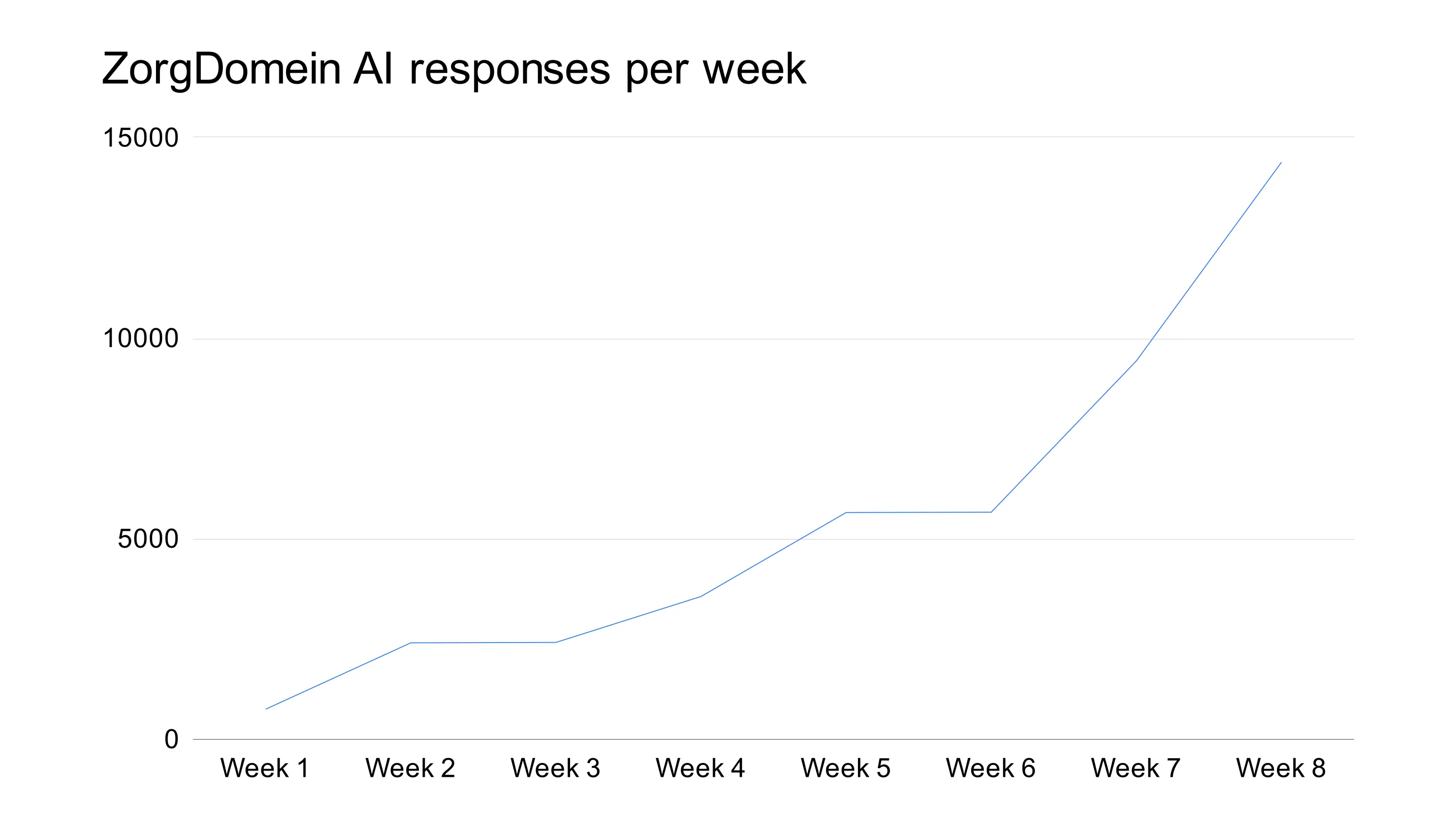
By week two of going live, they surpassed 2k responses from the AI, and within a couple of weeks, that number went up to 5k, 10k, and nearly 15k interactions per week. While they are still testing different approaches and making expansion plans, early results show a 20% reduction in support tickets during the initial weeks after launch.
Getting started
ZorgDomein’s first experience with Unless was through a 2023 proof of concept, which showed that the AI solution could significantly reduce patient inquiries. While they didn’t immediately start following the pilot, they decided to go ahead in 2024. Here, Umut tells us more:
We started with a successful proof of concept for patient use, but implementing it internally for healthcare professionals was more challenging and went out of scope. A year later, as the technology gained traction, we decided to dive back in. Since we already had proven results with Unless for patient inquiries, it was the natural choice. It’s been exciting, and things are going great so far.
Having already implemented the Unless solution previously, the ZorgDomein team was well-prepared to move quickly. In just one week they were ready to go live with end-users!
The platform is easy to use, and the setup was simple. Any questions we had were quickly resolved. We’re in regular contact, and Unless’s responsiveness to our requests has been excellent.
The solution in practice
Expecting magic dust, most organizations sprinkle their resources too thinly across an uncoordinated set of small initiatives, leading to little value. However, ZorgDomein chose an end-to-end approach, where several use cases add to the same goal of improving efficiency in customer operations.
1. Encouraging self-service across the knowledge base
Often, Unless customers start with an internal use case where the Unless Team Assistant helps the customer support team as they answer questions in their ticketing platform - like Zendesk, Hubspot, or Freshdesk.
However, in the case of ZorgDomein, Umut’s top priority was to increase self-service for patients. This meant going live with a public use case from the start. It also made their Patient Support knowledge base a natural place to start.
My manager and I are always looking for ways to increase self-service. That’s my core business, and Unless is a perfect example of how we can achieve this.
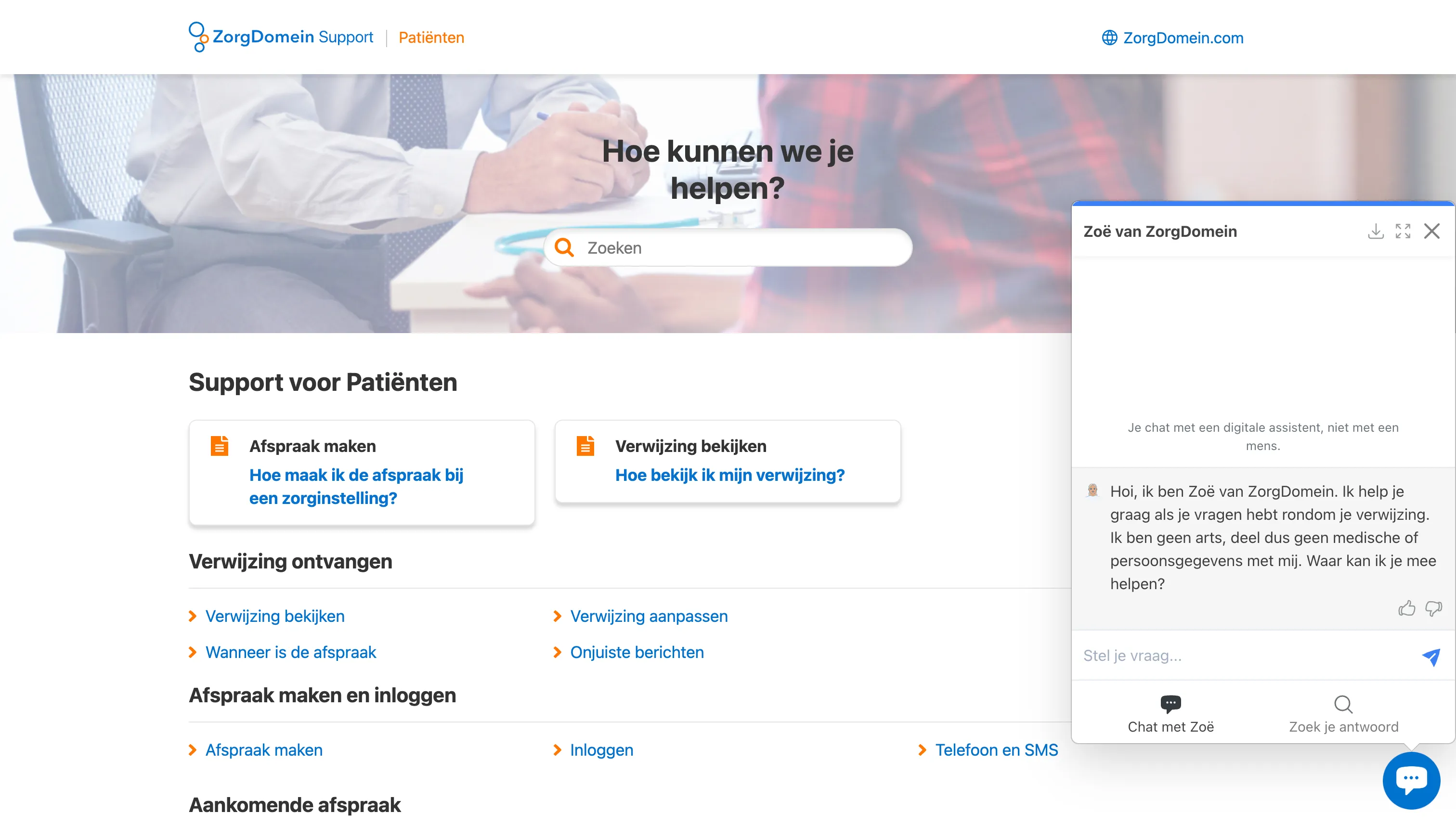
Having the AI available across the knowledge base provided the ZorgDomein team with insights into how patients interact with the chat. Now that this was tested, it was time to get more targeted toward their goal of increasing self-service.
2. Reducing tickets from the contact form page
Patients are a group that ZorgDomein often can’t help, since in most cases the right point of contact is the patient’s GP or healthcare provider. As a result, many patient support tickets come in via their dedicated contact form.
It’s rough on support because we get a lot of patient tickets, but we often can’t help them. So, we’re always looking for alternative ways to guide them to an answer before getting to the contact part.
Instead of a form, ZorgDomein opted to have the AI chat as a large overlay where the form used to be. With the chat already open and ready to use, patients can now receive instant guidance, reducing the amount of incoming patient tickets.
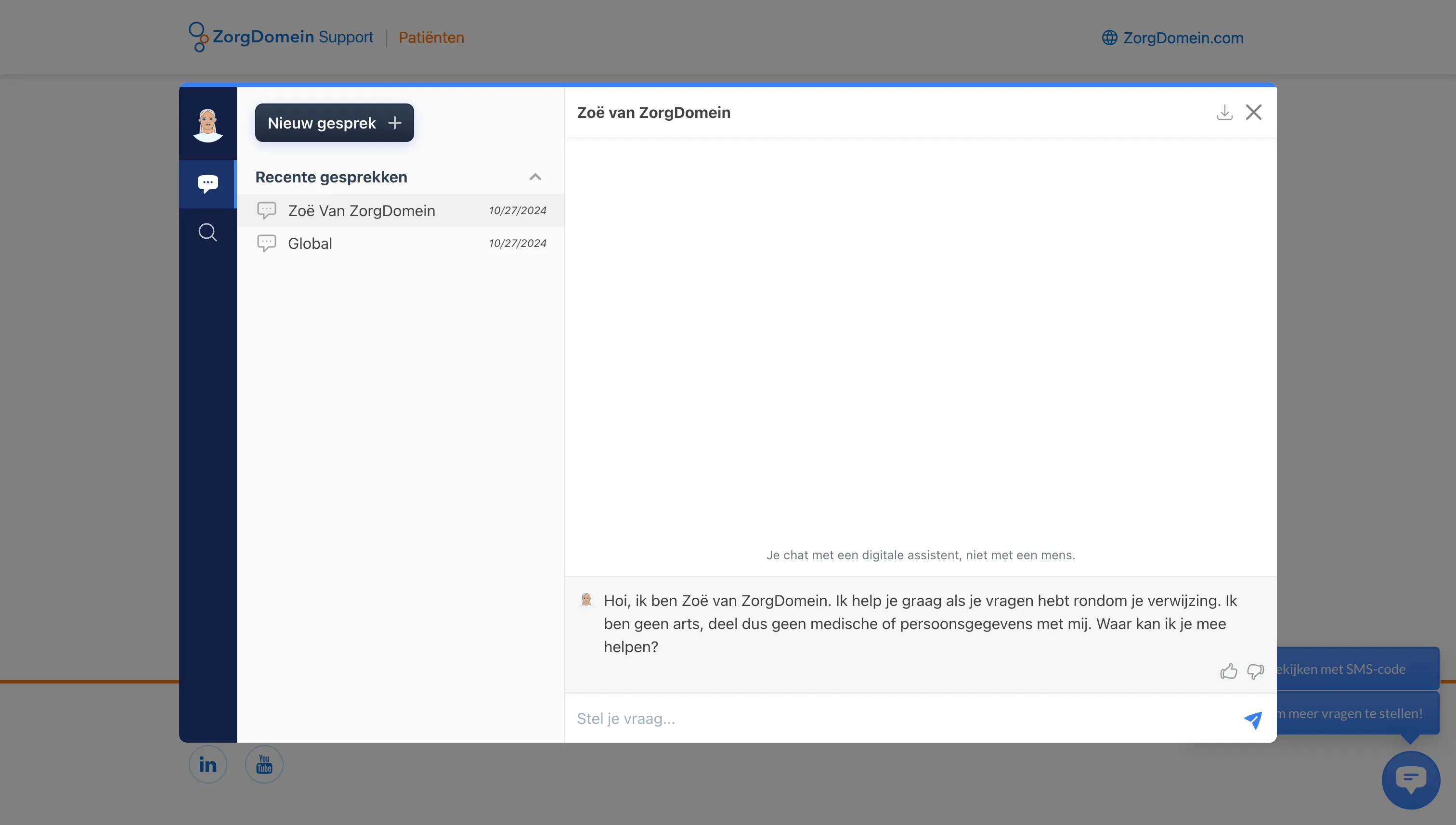
While we’re still in the implementation phase, we’ve already seen that a conversation with an AI can be a really good option.
3. Resolving patient queries at the source
Most traffic to the knowledge base comes from the patient information page of the ZorgDomein website. Patients often land on this page after receiving a referral email, making it a high-traffic area. This made it the natural next place to add the AI.
If patient questions could already be answered here, on the first point of contact, there would be no need to click further to the knowledge base or to fill out a contact form. Less friction, quick resolution, happy patients, and a happy support team.
Results
ZorgDomein had a rather quick implementation and deployment of the AI across different parts of their website and knowledge base. Since going live, they’ve seen a rapid and continuous increase in self-service, which is reflected in the weekly number of responses provided by the AI.
They’ve also seen an approximately 20% reduction in support tickets during the initial weeks after launch, though it’s still early days. Additionally, implementing Unless has led to discovering new insights:
The questions people ask clearly show where users get confused on our documentation or product. So, as a result of the insights from AI conversations, we’re reviewing the entire patient support flow.
Future plans
We’re still in the early stages of the process, but I’m getting requests from all over. People from different departments are asking if they too can use it. Now, we’re increasing the scope step by step.
Also, we’ve been testing the Unless browser assistant for internal use by the support team. There’s enthusiasm from the agents, as they liked the solution and it was cool for them to use.
Apart from that, I think the login page is the natural next place to add the AI for patients to navigate after getting their referral email. After that, we will probably work on expanding to segmented parts of the healthcare professional knowledge base. There’s plenty to do!
Key takeaways
ZorgDomein’s case highlights how an agile, iterative approach to AI integration can quickly demonstrate value while allowing room for continuous improvement. With Unless’s AI, ZorgDomein is not only reducing its support burden but also reshaping its patient interaction model, helping patients find answers faster.
When it comes to advice, I can only say: Just do it. Just start. Find something small, start yesterday, and see what you encounter.
In the beginning, it will take time. I’m working on this almost three or four days a week and tying it together with different projects with us internally. It’s all investment for the future.